Wednesday, October 24, 2018


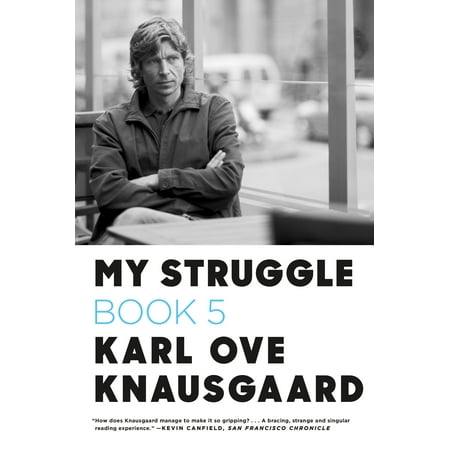
To immerse myself in something big, to get away from the news about the indecent president, I turned to this novel two days ago. I've read it before. It's over 600 pages. It's the fifth volume. The sixth, the final one, comes out in paperback next year. British novelist Rachel Cusk says it's 'perhaps the most significant literary enterprise of our time.' I had already given my copy to Goodwill when I finished it, so I had to go buy a new copy. If you've never read these books, look them up, look him up on YouTube. I'm reading the part now where he goes off to the Writing Academy. It's in Norway where he lives. Last night I put the World Series on mute at different times to read a couple pages.

My Struggle, Book 5: Some Rain Must Fall (Paperback)

Tuesday, October 23, 2018

on the New York Magazine site:

Sarah McNally, Unfiltered, on Her Soho Bookstore’s Forced Move

“I never thought I was a genius, but in the last week, I’ve discovered that I am.”


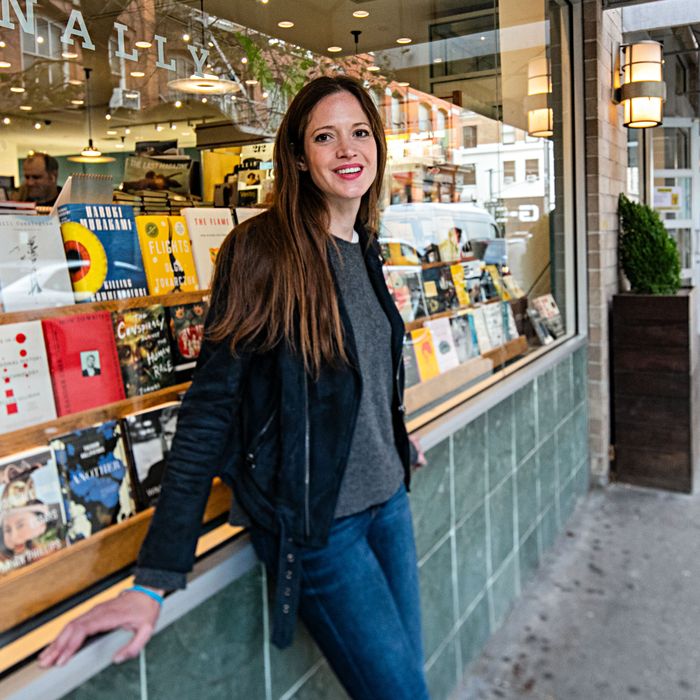
Sarah McNally in front of her Soho bookstore, McNally Jackson. Photo: Melissa Hom


Sarah McNally walked into her store on Thursday morning, in dark jeans and a black suede jacket, 10 minutes late for our interview. She shook my hand and apologized. “I lost my dog this morning,” she explained. “I was looking everywhere. I was like, Where is the fucking dog?!” The mutt, Chief, was now at McNally’s heels. “Then I found her under the covers of my bed.”

I was here to discuss what’s next for McNally Jackson, the revered bookshop McNally opened in Nolita in 2004. Earlier this month, the Lower East Side website Bowery Boogie broke the news that the store would be leaving the Prince Street building it’s always occupied. Panic spread on Twitter — was one of the last great indies about to shutter? — but McNally quickly reassured everyone that she was just moving to a new spot, on account of a stratospheric rent increase. As we stood in the store’s cafe, McNally noticed we were short a chair. She’d told a staffer to get more, she muttered: “How fucking hard is it?” It didn’t feel like a rhetorical question. Then she took note of the customers around us. “It’s all right,” she said. “I’ll just have to control myself.” I suggested we head downstairs, instead — to a basement space that hosts readings most weeknights.

McNally, surprisingly brash and unfiltered for a bookstore owner, is iconoclastic in other ways. As all of the city’s independent bookstores have struggled to redefine themselves in the age of Amazon, she’s not only succeeded — her company opened a second store in Williamsburg in January — but tacked in a different direction. Unlike newish Brooklyn shops that double as social spaces, heavy on author events and relatively light on inventory, McNally Jackson focuses on hardcovers and paperbacks and marginalizes all else. The owner estimates there are 14,000 books in the literature section alone.


All those books take up space — which in Manhattan has become expensive enough to amount to something of a retail crisis. There’s pending city legislation that would give small businesses more security, including the right to a 10-year lease and the chance to negotiate rent increases with the help of an independent arbitrator. But McNally says the real-estate market is better for her now than it would have been five years ago, when the store might not have survived a hike like this one.


Settled in at a long table downstairs, with Chief avidly licking her fingers, McNally explained how she’d chosen Prince Street in the first place. She was 29 at the time, the scion of two Canadian booksellers (her parents own the McNally Robinson chain), looking to open a store of her own. “I went down to the Department of Land Use,” she said, “and I got a map — huge, black-and-white, printed on shitty paper, with every building in the city. I colored in all the movie theaters, the cultural centers. I colored in pedestrian flow. This became the obvious area.” Her fingers rapped the table. “All the brokers were like, ‘You can’t open on that side of Broadway. You’re wrong.’ But I knew I wasn’t, because I’d drawn this thing out. And I wasn’t.”


Choosing a highly trafficked spot was critical, because her business model is built on brick-and-mortar browsing. A large share of her sales, she says, come from impulse purchases. And it’s true that for browsing, especially in world literature — Romanian poetry or new Nigerian fiction — there’s no better store in the city.

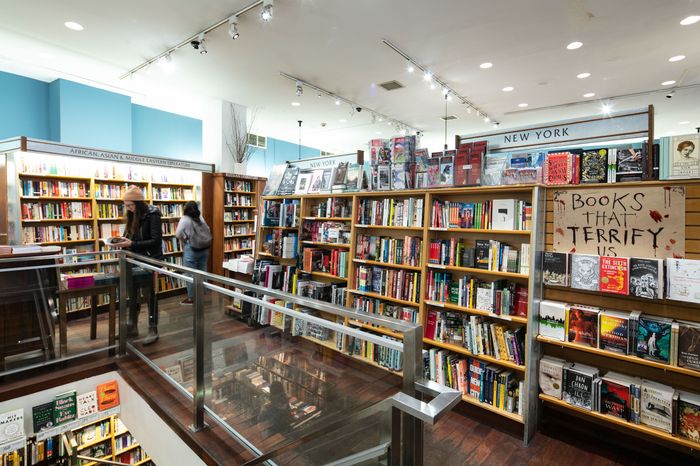
McNally Jackson in its current home (for now). Photo: Melissa Hom


McNally takes personal pride in her store’s design. After directing a customer to the basement restroom, she flapped her hands in excitement. “We just made this new Borges bathroom — have you seen it? It’s so rad! It’s so rad! That Borges cover — is it Labyrinths? That’s all mirrors? I modeled it on that, so I put mirrors all around, these sort of infinity mirrors. And we piped in audio from Borges’s lectures.” She gave due credit to her forebears in indie retail design: Kim’s, the dearly departed East Village video shop she frequented 20 years ago as a new arrival to the city, and Paul Yamazaki at San Francisco’s legendary City Lights Books. “Paul wants every inch of his shelves to be devoted to books people would probably not otherwise find,” she explained. “I’m not a purist like that at all, but his courage is in my mind, always.”


McNally may be house-proud, but she isn’t remotely attached to the building itself, aside from the rent — $360,000, below market rate for the neighborhood. She had expected to pay more when her lease runs out next June, but was surprised when the landlord, Alex Berley, told her how much he wanted: $850,000. She says she asked for time to think it over, and meanwhile began looking for a new spot in the neighborhood. Then, on October 9, she was caught off guard again. Bowery Boogie reported that Winick Realty Group was advertising the building for lease, starting next summer. (Berley could not be reached for comment.)


McNally responded with her own statement the same morning, calling the building “shoddy” and mentioning that it was “thrown up over a former chicken abattoir.” Downstairs in her store, she told me she regretted those comments — before continuing in that vein. “I was so mad at that dickhead,” she said. “But yeah, I can’t tell you how bad this building is. There’s not a single right angle in this entire place” — a flaw elegantly disguised by the bookshelves. “There are problems with the plumbing. When you look at the ceiling upstairs, you realize, Holy shit, she’s got a lot of leaks. The paint is peeling all the time. So it’s okay to leave.”


In recent days, concerned customers have been calling in for news, while McNally’s friends approach the topic gingerly. But McNally actually seems thrilled, if only because it gives her a chance to design more stuff like the Borges bathroom. She says she’s finalizing the lease on a new place nearby and hopes to announce the location, along with architecture plans, within a week or two. It’s large enough that she can fold one branch of Goods for the Study — a stationery store that has two downtown locations — and merge it into the new space. She pictures a rare-books room with a fireplace, and she’s already working with an architect on plans for balconies and skylights.


McNally pulled out a notebook and started showing me sketches: an arch at the entrance, a staircase surrounded by bookshelves. “I never thought I was a genius, but in the last week, I’ve discovered that I am. I’ve discovered my own genius in the last week! In this bookstore design. It’s going to be fucking heaven. It’s going to be fucking heaven on earth.”


Monday, October 22, 2018


Monday. And I needed
a knit cap on Chambers Street 
and wool mittens to hold the sign. 
One young woman who works 
in the Dept. of Education Building
that I stand in front of
put her hand to her heart
when she saw me. 
It's her first year. 
 

Saturday, October 20, 2018


Jennifer Egan: Why PEN America is Suing Donald Trump

"Trump's vitriol against reporters has made political journalism a more dangerous practice."


On Tuesday, PEN America, of which I am president, filed suit against President Trump for using his presidential powers to attempt to silence and punish journalists and news outlets whose coverage displeases him. PEN America is a literary nonprofit comprised of writers, journalists, editors and translators—all united around the goal of celebrating writing and defending the freedoms that make it possible. We believe (along with our legal representatives, Protect Democracy and the Yale Law School Media Freedom and Information Clinic) that President Trump’s threats and punitive actions infringe upon the First Amendment Rights of our members. Worse, they imperil our free press—one of the cornerstones of a healthy democracy.
 
President Trump is famously prone to captious bluster—a fact that endears him to fans and appalls detractors. He hurls insults blithely, instinctively, and the press is only one of his myriad targets. This is not to say that routine public denigration by the President of the United States has no impact; on the contrary, Trump’s repeated cries of “fake news” have eroded faith in the press and smudged the distinction between truth and propaganda. His vitriol against reporters has made political journalism a more dangerous practice, with journalists receiving death threats and requiring bodyguards at political rallies.
 
None of that is why we’re suing. Trump’s speech—like that of every American—is protected by the First Amendment. But the president has done more than vent against the press: he has threatened to use his presidential powers to stymie reporters and news organizations, and has followed through on those threats—by barring from the Rose Garden a reporter whose question he disliked; by ordering the Postal Service to investigate Amazon’s shipping rates in retaliation for negative coverage by the WASHINGTON POST (both are owned by Jeff Bezos); by legally challenging an unremarkable vertical merger between AT&T and Time Warner, the parent company of CNN, as punishment for negative coverage. Trump’s threats and actions impede the First Amendment rights of journalists and news organizations, and are therefore illegal. We are suing to make him to stop.
 
PEN America is a non-partisan organization. Founded nearly a hundred years ago in England between the Wars, it was built on a belief in the power of writers, and literary values, to help solve the world’s problems. At the first dinner of its American chapter, held in 1922, a letter was read aloud from John Galsworthy, PEN International’s first president, who wrote to the assembled members:  “We writers are in some sort trustees for human nature; if we are narrow and prejudiced we harm the human race. And the better we know each other . . . the greater the chance for human happiness in a world not, as yet, too happy.”
 
“Few would dispute that the suppression of writers presages deep and ominous problems in a society.”
These sentiments may sound quaint to contemporary ears; even the most optimistic among us is unlikely to hold that geopolitical conflicts can be solved through writerly camaraderie. But few would dispute that the suppression of writers presages deep and ominous problems in a society. 

PEN America has spent decades fighting for writers jailed by governments around the world who deemed their voices threatening and wanted them silenced: in China, Russia, Iran, Egypt, Saudi Arabia, Myanmar, and scores of other countries. Our successes, when they come, are testament to the power of writers united in support of other writers against oppressive regimes.
President Trump’s frank admiration for authoritarian rulers makes his efforts to hobble a free press here in America all the more alarming. His actions conform to what some call an “authoritarian playbook” for modern tyrants, in which the curtailing of free speech occurs subtly and gradually through a system of governmental rewards and punishments that encourage cooperation and gradually chill opposing voices. 

While American journalists have thus far responded bravely and vigorously in their reporting on the Trump Administration, a recent survey of PEN America members suggests that journalists are aware of the possibility of reprisals when they write negatively about the president. 

That should never happen in America, where free speech was conceived of, according to Ben Franklin, as the “principal pillar” of democracy. A leader with “the power to punish for words,” Franklin wrote, “would be armed with a weapon the most destructive and terrible.”
Words are powerful weapons too—as Trump’s efforts to quash them attest. In keeping with PEN America’s founding mission, we mean to stand together and show our strength.


Friday, October 19, 2018


I try from time to time to stop buying The New York Times every day. I tried this week. Like the other attempts, it lasted a day. No matter that you can get the late night game scores and stories online and you can't get them in the morning paper, getting the Times makes for a better day. Isn't that the idea?

Thursday, October 18, 2018

from yesterday's Times:

Craig Newmark, Newspaper Villain, Is Working to Save Journalism

Craig Newmark, founder of Craigslist, has been giving millions of dollars to media organizations to help journalism.


SAN FRANCISCO — Craig Newmark, so often accused of destroying journalism, is now doing his best to revive it.
In the late 1990s, Mr. Newmark, a former IBM programmer, built a service that allowed people to find apartments, jobs, computer parts, sexual partners, rides out of town and all sorts of other things through the newfangled consumer internet.

Craigslist was fast, free and popular, which means you could be pretty sure of getting what you wanted or getting rid of what you didn’t want.

Newspaper income from classifieds, which had provided up to 40 percent of the industry’s revenue, immediately plummeted. Researchers eventually estimated that Craigslist had drained $5 billion from American newspapers over a seven-year period. In the Bay Area, the media was especially hard hit.

Mr. Newmark is trying to stop the bleeding — although not here. He is among a gaggle of West Coast technology moguls who are riding to the rescue of the beleaguered East Coast media.

On Wednesday, New York Public Radio announced a $2.5 million gift from Mr. Newmark to expand its newsroom. That brings his total philanthropic efforts involving media in the last year to $50 million, much of it centered on New York.

A month earlier, Marc Benioff, another San Francisco tech mogul, bought Time magazine for $190 million. Mr. Benioff characterized his purchase as an investment. For Mr. Newmark, the situation is more political and more urgent.
“A trustworthy press is the immune system of democracy,” Mr. Newmark said. “Like we say in Jersey” — he hails from Morristown, N.J. — “you’ve got to put your money where your mouth is.”

That mouth is something that is often on Mr. Newmark’s mind these days. As he moves onto a national media stage, he is trying out personas, hoping for the right blend of sincerity and humor.
Mr. Newmark in 2004 with Jim Buckmaster, who has run Craigslist since 2000. “He won’t call you back,” Mr. Newmark said. Mr. Buckmaster didn’t.

“I’m not as articulate as I need to be,” he said. “I might not be the nerd people really need, but I’m the nerd they’ve got.”
Pause. “Is that quotable? I kind of like that,” he said.

Mr. Newmark’s media-giving spree began in June, with a $20 million gift to the CUNY Graduate School of Journalism, which put his name on the door. This met with some criticism. Felix Salmon, a correspondent for Axios, tweeted that “it’s utterly bizarre to name a journalism school after the man who almost single-handedly destroyed local newspapers.”

Mr. Newmark followed that up last month with another $20 million gift to The Markup, a new site dedicated to investigating technology. He also gave to a new nonprofit effort called The City.

His media ventures differ from those of his peers — not only Mr. Benioff but also Jeff Bezos, the Amazon founder, who bought The Washington Post, and Laurene Powell Jobs, who is the widow of the Apple co-founder Steve Jobs and bought the magazine The Atlantic.
“I’m not the kind of guy to own an operation,” Mr. Newmark said. “I help, then I get out of the way, then I stay out of the way. That’s my strength.”

He disagrees that he helped kill newspapers. In the back garden of the Reverie Cafe, near San Francisco’s Haight-Ashbury neighborhood and not far from his house, he said he was getting a bum rap.

He cited the work of the media analyst Thomas Baekdal as proof that newspapers’ decline long preceded Craigslist. In an email, Mr. Baekdal largely absolved Craigslist of any responsibility for devastating newspapers and hastening the end of the world.

“If we were to imagine a world where Craigslist was never invented, I do not think it would have made any difference,” Mr. Baekdal wrote. “We in the media industry insisted on keeping the classified market limited and high-priced so that it supported other parts of our businesses where we were essentially losing money (a.k.a. journalism). It was only a matter of time before someone realized there was a more efficient way to do this.”

Mr. Newmark gave $20 million last month to The Markup, a new site dedicated to investigating technology. It is run by, from left, Jeff Larson, Julia Angwin and Sue Gardner.

The fact that Craigslist was free, however, doubtless accelerated its effect. It is now in 700 cities in 70 countries.
“Craigslist helped people put food on the table, helped people get a table, helped people get a roof under which to put the table,” Mr. Newmark said. It is something he has said before, he acknowledged, “most recently some hours ago, on Twitter.”

Mr. Newmark’s charm at 65 is that he is the mogul who declines to act like one. He has looked 35 for the last two decades — round, balding, goateed. He got married six years ago, and even before that his bride, Eileen Whelpley, promised a makeover. She told The San Francisco Chronicle that “Craig is going to do yoga, although he doesn’t know it.”

So how is the yoga going?
“Let’s say that’s still in the future,” he said.
Mr. Newmark still does customer service for Craigslist, which mostly consists of booting off troublemakers, but has not had an operational role for a long time. “As a manager,” he noted, “I suck.”

The site has been run since 2000 by Jim Buckmaster, who is described in his official biography as possibly the only chief executive who has been labeled a “socialist anarchist.” Mr. Buckmaster keeps a low profile. “He won’t call you back,” Mr. Newmark said cheerfully. (Mr. Buckmaster didn’t.)

Unlike just about every other venture begun in the dot-com era, Craigslist never even thought about going public. It has no ads or subscription fees. (It charges for job postings in the United States and for brokered apartment listings in New York.)

Every tech mogul ever born has maintained that it is not about the money, but for Mr. Newmark and Mr. Buckmaster this really seems to be true. In 2006, Mr. Buckmaster told an audience in New York that there were problems with “obscene wealth.”

“You should be careful what you wish for. Do you really want to walk around with bodyguards?” he asked. The audience shouted back, “Yes, yes!” and “I do!”
Mr. Newmark flies commercial. At Cafe Reverie, his consumption was limited to a glass of water. His biggest extravagance is a $6 million New York City apartment.

“I’d like things to start in New York and spread,” Mr. Newmark said.

His net worth, according to Forbes, is $1.6 billion. Mr. Newmark brushed the figure aside. “My focus is on giving it away in a smart way,” he said, though he didn’t want to say how much he plans to give away. In previous interviews, Mr. Newmark, who owns about half of Craigslist, has asserted he is worth much less than people assume.

One thing is clear: He is not spending his money on Craigslist. He can’t remember the last time he got something off the site, although he said his wife used it.

“Craig doesn’t need to prove he’s someone by having possessions,” said Sylvia Paull, a media consultant who has known Mr. Newmark for 20 years. “His way of living mirrors Craigslist. For years people have been saying, ‘You’ve got to upgrade the interface, make it more interactive, add color.’ He just says, ‘No, I like it simple and plain.’”

Mr. Newmark has been a steadfast supporter of women in tech, and built a website for Ms. Paull’s networking group for women, Gracenet, back when that was a labor-intensive initiative. He also funds veterans’ causes. He has lingering guilt about not serving in Vietnam even though he knows he wouldn’t have been much of a soldier.

Contributing money isn’t enough. He shows up at symposiums, like a recent one in Berkeley, Calif. He told the audience that he traced the crisis in journalism back to the mid-1990s, when the speaker of the House, Newt Gingrich, offered “attractive lies the press just couldn’t stay away from.” He criticized The New York Times for its coverage of the 2016 presidential race and offered general advice: “Don’t be a loudspeaker for liars.”

Afterward, the first member of the crowd to go up to him said he found it “kind of ironic” that the guy whose internet site had done so much to undermine newspapers was now funding journalism. For the umpteenth time, Mr. Newmark recommended Mr. Baekdal’s work.

Journalism in San Francisco is still in crisis. San Francisco Magazine just made clear its future will involve a lot less journalism and a lot more fluff. Many staff members have left.

“I’d love to see some of the S.F.-based tech moguls step up and help journalism in their own backyard,” said Gary Kamiya, a former editor of the magazine.
But Mr. Newmark is concentrating on New York, where local coverage has also faltered.

“My goal is to support the groups which are not only going to do good work but say, ‘Here’s how you do good work,’” he said. “I’d like things to start in New York and spread.”

As he was leaving Cafe Reverie, Mr. Newmark checked his phone.
“Twenty-seven new emails,” he said.
How many were asking for money?
“All of them,” he said.


Wednesday, October 17, 2018


In the month since my laptop fell out of my fingers onto the floor and broke when I was moving it from my lap on the couch to the table in front of me while trying to do something else at the same time with my other hand I've been coming here to my neighborhood library and signing-in to use one of their computers at a long table with other people some of them homeless. I like doing this. It feels more part of something than staring at a computer at home. I only get 45 minutes on it. I wish I got more. I like the setting. The people around me.