 In his op-ed for Forbes
last year
In his op-ed for Forbes
last year, Panos Mourdoukoutas, a professor of economics at LIU Post in
New York, suggested that Amazon stores should replace libraries to save
taxpayers money. Following the backlash this preposterous suggestion
created,
Forbes took the article down. But the outpouring of
love for libraries in response to the piece was priceless, reconfirming
the intrinsic role of libraries in the fabric of American communities.
Libraries were instrumental to my experience as an immigrant and I
rejoiced watching social media explode with messages in defense of the
local library as a cornerstone of our democracy.
One of the hardest aspects in the life of an immigrant is not fully
belonging anywhere. One foot stays firmly rooted in your country of
origin no matter how hard you plant the other one in the host country.
Even though I’ve lived in the United States for 24 years, the first
thing people ask upon meeting me, courtesy of my accent, is “Where are
you from?” And when I go back to Bulgaria, everyone calls me The
American. But there is one place where I always feel at home—the
library. Any library. Anywhere in the world. The familiar smell of
books, the shelves packed with old and new tomes, the friendly staff
eager to help.
I. Local libraries provide a refuge and a community
I grew up in Bulgaria during the Communist years and when, in the
spring of 1995, I arrived in New York at the age of 22, barely speaking
any English, the culture shock nearly knocked me off my feet: there were
the skyscrapers (the tallest building I’d seen was 24 floors); the cars
(my family didn’t own a car and for the first year in New York, I
considered it the greatest luxury to take a ride outside the city even
if for only 30 minutes); the grocery aisles stuffed with all types of
food, ten different brands for each item (in the years before I’d
immigrated, we’d had a shortage of basic goods, like milk, and the
government had issued a restriction on the number of bottles one could
purchase). I didn’t know what a credit card was, nor a check. I didn’t
understand the concept of health insurance. I’d never touched a
computer. I’d never eaten a burger, a doughnut, a bagel.
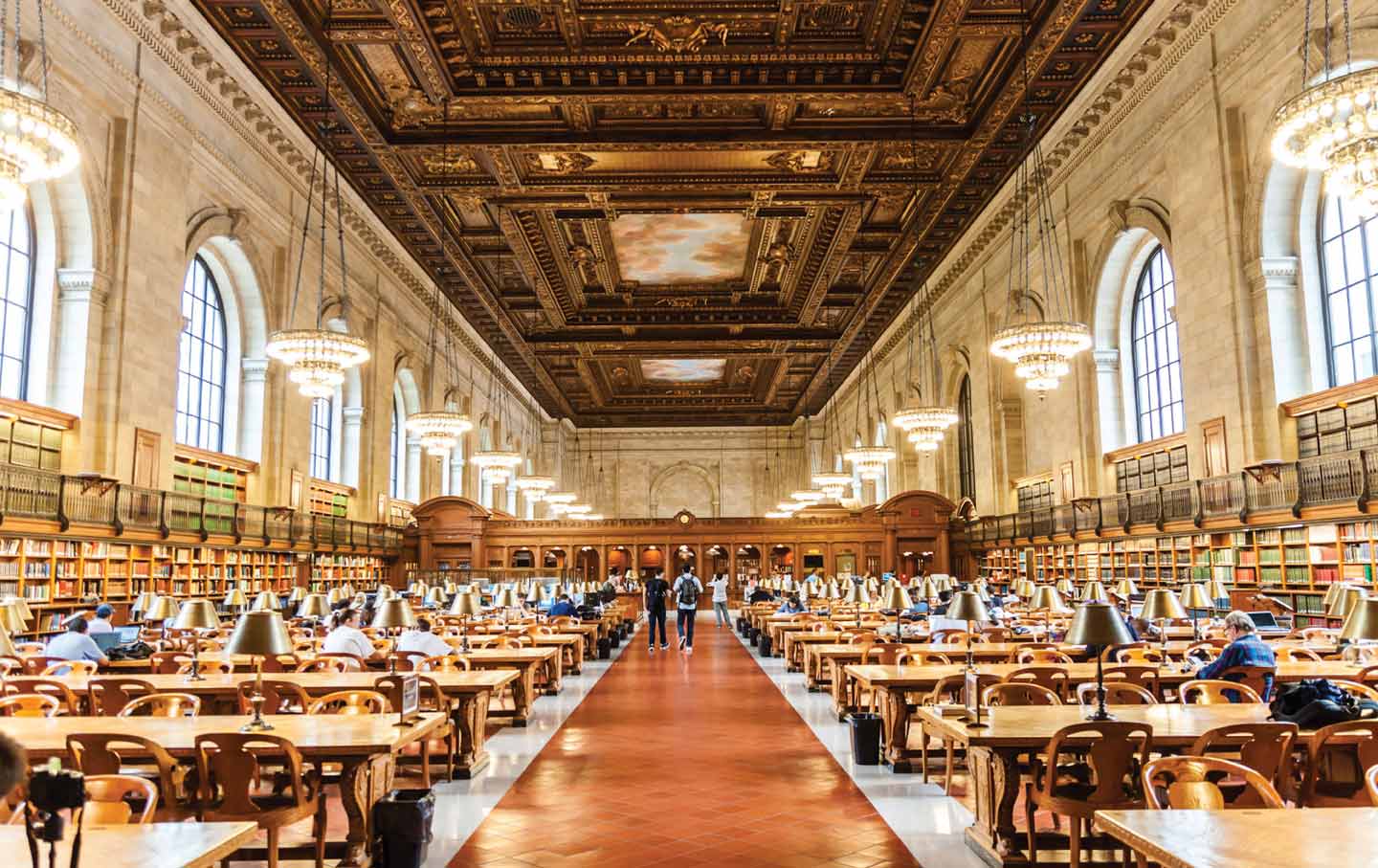
Feeling lonely and isolated, I found refuge in
the Yorkville branch of the New York Public Library. It was the only
familiar place in this foreign land.
I didn’t know a soul except for my husband. He was the superintendent
of a luxury building on the Upper East Side where we had a tiny
apartment on the ground floor. Our neighbors rode in limousines and if
they ever encountered me in the lobby, they averted their gazes without
so much as a nod in greeting. My job as a cleaning lady didn’t exactly
help in meeting people either. This was long before cell phones and
social media. While many people in America had computers and some had
AOL emails, I didn’t even know what an email was. The letters I wrote to
my friends and family in Bulgaria took two weeks to travel in each
direction.
Feeling lonely and isolated, I found refuge in the Yorkville branch
of the New York Public Library. It was the only familiar place in this
foreign land. Here, among the shelves of books, even if I didn’t speak
to people, I felt comfortable. Like I belonged. We were a community of
readers, regardless of our maiden tongues, our religion, our age or the
color of our skin. The Yorkville library was not that different from the
one where I’d checked out my first books as a kid in Sofia. All you
needed was a library card, and you could read as many books as you
wanted.
II. Libraries are free
Because libraries are free no one is excluded from their services.
Children, people with disabilities, the elderly, the poor, the rich,
everyone can join. In those early years in America, when I bought my
clothes in thrift stores and furnished my apartment with the chairs and
carpets my wealthy neighbors discarded, my local library was the only
place where I didn’t feel poor, foreign, lesser. As librarian Amanda
Oliver pointed out in her Twitter response to the
Forbes op-ed, the library is “one of few places in our society where the underserved can be treated with dignity and respect.”
Public libraries erase privilege, providing access to information to
those who cannot afford to purchase their own books, computers, WiFi. I
learned a lot of my English by checking out novels I had previously read
in Bulgarian—
War and Peace, Crime and Punishment, Martin Eden—poring over the familiar stories, figuring out the meaning of the words as I went along.
III. Libraries can empower the disenfranchised
Libraries provide free access to information and that includes not
only books and magazines, but also computers, WiFi, films, research
databases, and invaluable human guidance. I learned how to write a
resume by consulting different guides before sitting down at the
automatic typewriter I had at home and typing it up using just two
fingers. Following that experience, I checked out a book on how to type
and started practicing.
While access to information is very important it is not enough. You need to know what to search for and where to search for it.
I’d dropped out of the architecture and civil engineering university I
was attending in Sofia in my third year to come to New York, naively
thinking that I would continue my education in America. It didn’t take
me long to realize how out of reach my goal was. I had difficulties
finding a job as a cleaning lady; saving enough money for college was
out of the question. My break came when I told one of my clients about
my background in architecture. He’d recently made a donation to the
Thomas J. Watson Library at the Metropolitan Museum of Art and asked the
head of the Periodicals Department if they could use someone with a
background in architecture who spoke Bulgarian and Russian. A couple of
weeks later, I was accepted as a volunteer; and soon thereafter, I was
offered a part-time job.
The Watson Library became my home, the staff my family. I learned to
use a computer there, taking staff education classes in MS Word and
Excel. I learned to make small talk. I made friends. My vocabulary
expanded. I was using words like “acquisitions” and “deaccession” on an
everyday basis. A couple of years later, the head of the cataloguing
department, where I was assisting at the time and who knew I was eager
to go back to school, sat me down at a computer with Internet access.
She pulled up Columbia University’s website and explained that if I
worked for the university, I’d be eligible to take two classes per
semester for free. She also showed me where to search for employment
opportunities. Thanks to her, I applied and got a full-time job at the
Butler Library. Soon after, I was accepted into the General Studies
program of the university from where I graduated with honors, summa cum
laude and Phi Beta Kappa.
I would have never known about any of these opportunities without the
help of so many people who steered me in the right direction. Local
librarians know the needs of their patrons and can guide them to the
information that might be most helpful in their specific situation and
where to look for it.
The libraries in New York provided me with community—both as a patron
and an employee—engendering a sense of belonging at a time at when I
knew close to no one in the country and felt foreign nearly 24 hours a
day. Libraries are the cornerstones of democracy, where all
people—regardless of income, race and religion—are welcome. To me,
they’re also the one place where I truly feel at home.
__________________________________________
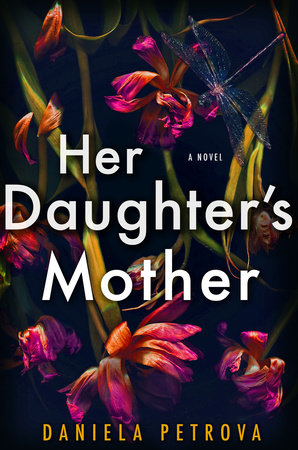 Her Mother’s Daughter
,
by Daniela Petrova, is available from G.P. Putnam.