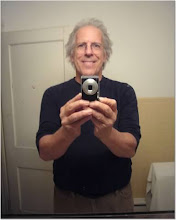
Thursday, November 21, 2013

Big Adventure In The Mailbox
My unlikely once-a-month excitement

Maybe 40 years ago I was sitting in the sun reading on the uncovered upstairs porch in a double house inLakewood, Ohio when two squirrels started racing back and forth aggressively in a love duel on an overhead, right-near-me power line. The noisy tooth and claw and fur of it all, sent me inside. I was scared. Weirded out.

So, you wouldn’t think that ‘Outside’ would be maybe my favorite magazine. I love it. The photos most, of snow in the mountains, yurts at night lit up like pumpkins. Campfires. Rivers and rafts. Ads for cool-colored outdoor stuff. Clothes. Ads for summer trips through Yosemite. Or to Patagonia. Ice fishing. Great writing.

I’ll bet you’d like it too.


Do yourself a favor. Read this book. Story-telling/writing at the highest level. Her descriptions of New York people and the places they go are perfect.

Wednesday, October 16, 2013

YOU DON’T KNOW THE HALF OF IT

There are two sides or more to every life. 
Mine too.


I lead two lives. One loves to hang out in bookstores and libraries, and put out a newsletter and hold a sign about kids and reading. For Christmas, one sister buys me a healthy gift certificate to a bookstore in the Village. For Christmas, I send only books to both sisters and my three daughters and my five grandchildren and my nieces and nephews and their kids. My apartment is spilling over with books. I sleep on the couch rather than the bed because I like the way the lamp by the couch lights up the book I’m reading before I’m ready to sleep, or when I frequently wake up two hours later from things that keep going bump in the night. I have more than one copy of some books.

My other life likes sleeping on the couch, too. That’s where my little clock-radio is, on the coffee table, sitting wobbly some nights atop a jagged, ever-changing pile of books and magazines. I need a radio on to fall asleep. I need sports talk. I don’t need scores. I need talk. Marty from Woodside. Vince from Staten Island. When I visit my youngest daughter in Wyoming, some nights I can’t find a sports station. Then I have to make do with talk about alien abductions on ‘Coast to Coast’ radio.

On the bus to visit my friend in Boston last weekend, I read from a book of stories by Alice Munro, who had just won the Nobel Prize. She’s my all-time favorite writer, which you wouldn’t think from a guy who listens to sports talk to get himself to sleep every night. Her stories make you put the book down when you finish one to let your mind and your whole life readjust to your surroundings. I’m moved to easy tears at the end of some of her stories. I’ve read a few of them out loud to a friend over the years. There were times I had to stop and clear my throat, so perfect and miraculous were some of her sentences.

I’m from a small rural town in the western part of New York State. Not too different from Munro’s Canadian settings. I’m a displaced person I realize when I’m reading her.

When the bus was approaching Boston, I put the book away in my backpack. I wanted to be alert so I could see Fenway Park out the right-side window. The small town kid in me never tires of seeing the park the way it sits there squeezed among the old buildings. The big book-cluttered house of my friend where I’d be staying is very stimulating and comforting to me with all his stacks of reading matter. So is the high quality of Boston sports talk. Tommy from Dorchester. Jonah from Newton.

Some women I dated over the years, knew, but denied it for years in some cases, when they saw my house or my apartment, with all the books, and the dust under some of them, that this was not a guy who was going to get married again.

Two weeks ago two guys who I worked with on a magazine I edited in Cleveland stayed at my place for a few days. They’re younger. Both writers, like me. And, like me, both sports fans, big time. We drank beer most of the nights at a bar down the street and watched, and talked, baseball and football till the wee hours.

One thing about Alice Munro I noticed in all her stories is that they’re not about you. They’re exactly about the people in the story. They are so particular, rendered in such a way that they become more real than any people you read about in other writers’ stories. They’re not even about her. I like that. It’s like looking at a box of random old family snapshots at a flea market. The names and dates written in white ink.

Not everybody on buses is reading Alice Munro. Though the people on a bus to Boston are more apt to be reading something than passengers on buses I’ve taken to other places. They mostly look bright, like you think people going to Boston for the long weekend would. Less than half of them got off to get food when the bus stopped for 15 minutes at a Burger King. Most buses empty out at such stops, some of the sleepy people with long cigarettes in their mouths waiting to be lit as soon as they file off the bus. The guy sitting next to me had a Mac Pro on his lap and was writing music on it. It made me think of Sister Ambrosine in grade school making musical staffs on the blackboard with a rake-like holder with five long pieces of white chalk in it.

She made sure we knew how to read and spell and write neatly. We had to stand up straight sometimes and
read to the class. We had cursive charts above the blackboard. We had spelling tests every Friday. Spelling bees, too. Everyone had to line up against the wall and participate. Kids like me with college-educated parents, next to kids who lived out in the country, next to foster kids. She walked among the aisles with a ruler or a rubber-tipped pointer and you were always a little bit afraid of her. A football player I roomed with at Notre Dame said his favorite coach always kept you a little bit afraid.

What would the NYC public school grads who read at such a poor level do on the bus? Would they read? Or would they sleep? Would they even be going to Boston for the weekend? What if they had had Sister Ambrosine? I wonder if that would have made a difference. What do you think?

Stephen King has a new book out. So does Donna Tartt. And Elizabeth Gilbert. And Alice McDermott. And Terry McMillan.  And Amos Oz. Jonathan Franzen, too. And Dave Eggers. Alice Munro’s paperback collections are hastily being restocked since she won her big award. I wish I had a long bus ride, long enough to read them all. When I needed a break, I could pull my iPhone out of my left hip pocket and dig my ear buds out of my backpack and listen to some sports talk, while the country glided by the window. Toss me a cigarette, I think there’s one in my raincoat.

On Saturday my Boston friend drove 45 minutes to Lowell so we could see Jack Kerouac’s grave. That night we went to a local tavern to watch the first few innings of the Red Sox game.  We listened to the rest of it on a good radio in his big kitchen. Nice day.


Thirty-Five Bucks Might Seem A Lot

But it’s 1268 pages of dazzling writing

Do you have any of The Library of America series? They’re beautifully bound books, on fine delicate paper. You think you’re holding a museum copy. They’re still adding to the library. I’ve got Philip Roth’s works, and Saul Bellow’s works.

I’ve got Flannery O’Connor’s too. If you read her in school, you’d remember. If you can’t remember, there are books of hers in any good bookstore you try. Do try.

Some day you might want all her stories and some essays of hers. This is the book you’ll want.
Are Grass Stains A Thing Of The Past?

A book in praise of playing outside

I grew up in a rural small town. Some of my buddies in grade school had BB guns and hunting knives. And they loved to fish. They were like their fathers. I was like mine, who did none of that stuff. I thought he was a wuss sometimes for not being an outdoorsman.

I did go in the woods a lot though. We were always outside. Sports every afternoon. TV didn’t rule then. It does now. We watch it 60 hours a week, studies say.

Kids need to play outside more. This convincing book of essays from Orion magazine is what we need to read to remind us to turn off the tube and have the kids investigate the real world.

It’s in bookstores. She’s not Anne Frank, but her face is an icon now.

Monday, September 9, 2013

What’s Your Sign?

Thinking back on a conversation with a young woman about the meaning of things.

I should let the sign do the talking. It says exactly what I think. But sometimes people ask me about it and I have to say something.

Last week a young woman who works for the Department of Education, whose big building I stand in front of on the sidewalk every morning for an hour with my sign, approached me and said she sees me there and don’t I think they’re doing that, teaching the kids to read?

I rushed out an answer; something about how the numbers we read in the paper, the reading scores, show that, no, they certainly aren’t teaching the poor kids to read well. I said it too hurried probably (there were people passing us there on the sidewalk and I wanted them to see the sign), which, I’m sure, made me seem distracted and aggressive. I felt glum later that I’d poorly represented my thoughts to her. Which is of course why writers write: to give a more extended answer/critique/suggestion to the things they see wrong with the world.

Here’s what I should have said. I should have said how dare the department begin yet another school year without a plan to attack the sinful lack of ability to read well that so many of their students suffer from? I should have said I hadn’t read anywhere that some new plan was in place to rectify that. If she’d said the Common Core curriculum was going to do that, I’d have said, no it’s not. Not that it’s a bad idea for a program, but it’s just not meant to tackle the tough stains. Something stronger is needed for that.

I thought about taking my sign to the debates the candidates for mayor have been having. But I decided to keep holding it in just the one place I hold it in the morning on Chambers Street. I wasn’t going to chase down the pols. I don’t think much of this batch at all. None of them has spoken about the problem I see as the most urgent: teaching all the school kids to read well. These candidates are an unimaginative group of people.  How could they not see that as the biggest problem? It really is the crucial problem. Solve it and almost everything else will fall into place. Sometimes when a person walking by my sign will say, I couldn’t agree more, I’ll say, it would change the world. They almost always nod in agreement.

Just before Labor Day I took the train to Chicago to meet up with one of my sisters and my niece to drive to Northern Michigan to my other sister’s cottage. I like the train. I like looking at the Hudson River out the window. It’s a long ride, but I take a book with me and some magazines and a notebook. You can walk through the cars and look at people. The poor people sleep almost the whole way. They bring old pillows and sheets. They don’t read. They look at movies on their screens when they aren’t sleeping. Their kids aren’t reading anything either. They’re restless and you hope you aren’t sitting across the aisle from them. If I had a chance to talk to the young woman again, I’d tell her about the train.

The book I took with me, Zen and the Art of Motorcycle Maintenance, I’d read 40 years ago when I was a teacher in Cleveland. I taught school to get out of going to Vietnam. A lot of young men did that then. It wasn’t only to avoid the draft that we did that. It was an idealistic time and teaching in urban schools was a way for us to change the world. The book evokes that era. It brings back vivid, wistful feelings. It’s not lost on me that I still say teaching poor kids to read well could change the world. I believe it. It’s tragic that that mission is still not being accomplished. Forty years later. My hair’s turned gray. I have five grandchildren.

Here’s the first paragraph of the book.  I can see by my watch, without taking my hand from the left grip of my cycle, that it is eight-thirty in the morning. The wind, even at sixty miles an hour, is warm and humid. When it’s this hot and muggy at eight-thirty, I’m wondering what it’s going to be like in the afternoon.

Reading is our best, most enduring pastime. TV and movies are stimulating in their way. So is listening to music. So is noodling around on the computer. Sports and exercise excite parts of us. But reading is that quiet, deeper pleasure that talks to us privately. It makes us dream our dreams. I’d like to have said to the young woman the other morning that we’re taking dreams away if we don’t teach kids to read well.

What she really should do is hold my sign for a week. She’d see the faces on people who look at the sign.
I just hold the sign. I take no credit for its message. That came to me from I don’t know where. Maybe in a dream I had.

Another school year is beginning.  I’m excited. Kids will be back on the street where I stand with the sign. College kids. High school kids. Little kids with parents or nannies. Some in cute uniforms. Some of the little ones will try to read the sign. They’ll keep looking back at it as they pass me. You should see their faces when they work their way through the words and decipher the message. They’re very proud of themselves.
There are some adults who also look back as they pass. They couldn’t read it at a glance. You wish the young woman could see that. You wish she would tell her next department meeting what she saw.

I take the 6 train in the morning, with my sign and a book and some of these newsletters, from where I live on Third Avenue in the 20’s down to Chambers Street. It’s a quick trip and I maybe get three pages read each way. I’d get more read if I didn’t look around at the other riders so much. Many, maybe most, of the people are the same every day. I like to see what they’re reading. More people than I would have guessed are reading the free paper they hand out at the subway stops. Some people are reading a daily newspaper. Some have Kindles. Not that many though, which surprises me. The people I stare at the most are the Asian mothers or fathers or grandparents with little kids. They make sure that the kids have something to read, or they give them word search pages and a pen or pencil to pass the time till they get to Canal Street. If I had not been in such a hurry when I was talking with that young woman the other day, I could have told her about that train ride too.