Sunday, December 9, 2018


From the latest Columbia Journalism Review:

What’s behind a 

recent rise in books coverage?

IF IT OCCASIONALLY FEELS like nobody reads books, anymore—that we are indeed witnessing the slow death of the literary novel, and the rapid decline of leisure readingand the steady increase of American non-readers—why is it that mainstream publications are writing more about them?
Since the beginning of 2017, The New York Times has continued to expand its already robust book coverage. More recently, New Yorkannounced that it would triple its book coverage. In October, The Atlantic launched a Books section and a newsletter, “The Books Briefing,” with plans for “additional products.” Even BuzzFeed is getting in on the action: in November, they launched an online book club, complete with an attendant Facebook group and newsletter.
For the Times and The Atlantic, the changes arrived at a moment of substantial growth for each publication as a whole.
In February, The Atlantic announced a sizeable editorial expansion, spurred on by a significant post-election boost in readership and by Emerson Collective, the philanthropic organization that acquired a majority stake in the magazine last summer. The new Books section, TheAtlantic.com editor Adrienne LaFrance said, is part of an enlargement of the site’s culture coverage, as well as a natural extension of the magazine’s literary roots. According to a spokesperson, in the month since its launch, the section was already receiving a 20-percent higher median view time than other sections of the site.
The Times’ book coverage used to operate out of three different departments—the business desk, the culture desk, and the Book Review. Now, it is centralized under the stewardship of editor Pamela Paul, who attributes the change, in great part, to the growing number of online Times readers.
“In a digital world, where people aren’t encountering these distinct sections of the paper in discrete parts of this physical newspaper, it becomes very confusing,” Paul says. “You would basically have three separate departments covering books totally independently and yet, in the eyes of most readers, in a single space.”
Unlike other newsrooms, the Times still has the manpower necessary to run a freestanding newspaper book review—the last of its kind in the country—which requires reading through thousands upon thousands of galleys. The Book Review is sticking to its core strengths, such as serious reviews and reportage, because it has the resources—including staff critics and full-time publishing reporter—to outperform competitors.
“Given the competitive landscape, and frankly, the fact that no one else was doing what we were doing, there was a real opportunity to do more with books,” Paul says.
Some books, such as reissues, translations, anthologies, or visual books, don’t make sense to review, but are still worth covering somehow, Paul says. Thus, the Times has also been reconsidering the way it approaches book coverage, whether through newsy recommendationsInstagram, its podcast, or more essays that integrate books into the culture-at-large.
“In the past, when a book came into the Book Review, the question we would ask is, ‘Does this book deserve to be reviewed? Should we review this?’” Paul says. “Now the question is, ‘Does this book merit coverage? And if so, what does that look like?’”
“In the past. . . the question we would ask is, ‘Does this book deserve to be reviewed? . . . Now the question is, ‘Does this book merit coverage?’”
Boris Kachka, the books editor at New Yorkwhose web audience has increased dramatically over the past year, is working on answers to those same questions. He and New York’s editor-in-chief, Adam Moss, started planning for their expansion in June, after noticing significant feedback in reader surveys about the site’s lack of book coverage.
New York’s move is less about a sudden burst in demand for books, Kachka suggests, as it is about carving out a space to cover those that may get “relegated to the sidelines of the categories under which they fall”—like, say, a novel that’s only written about on Vulture in relation to its big TV adaptation.  As such, he has “somewhat free reign” to hire freelancers to write stories. (New Yorkhas just redesigned its website, and instituted a paywall.)
His strategy, which cuts across Vulture, the Cut, Daily Intelligencer, Grub Street, and The Strategist, incorporates far less “up and down” reviews, opting instead for highly specific recommendationsdebate-inciting rankings, and reviews that take into account a reviewer’s personal point of view and say something more about the culture.
This isn’t dissimilar to the modus operandi of BuzzFeed’s Books section, which was founded in 2013 on the basis of enthusiasm.
“I was just at a panel about the future of books criticism at BookExpo, and almost everyone on the panel was saying this is something we have such limited space for, so why waste it on books we’re not recommending?” BuzzFeed News Books Editor Arianna Rebolini says. “As far as the online world, of course, you’re not limited, but time is. And are you going to put your time into something that’s not going to share well?”
Like the Times’ relatively new “Now Read This” book club, BuzzFeed’s free “virtual book club” is an analog solution updated for a digital world—a forum for people to meaningfully discuss and dissect the same book online when it’s much less feasible for people to do so in real life, at least not the way readers might’ve when Portnoy’s Complaint was published, or the way fans, oftentimes sitting in the same room as one another, can when a new Game of Thrones episode airs. BuzzFeed claims the club will actually net them money, due to Amazon affiliate links. (Other sites, including the Times and New York, use these links as well.)
In some ways, mainstream book coverage is coming down from its historically lofty perch to join the rest of arts coverage, catering less to the intelligentsia and more to the casual reader, who may not be interested in literary fiction or nonfiction. With so much to watch and read and listen to—and so many people chiming in on what to watch and read and listen to—it’s no surprise readers are hungering for a trusted source who can point them in the direction of books tailored to their interests. And those same readers may be looking for the kind of full-court, blogosphere press typically reserved for watercooler shows like Sharp Objects and meme machines like A Star Is Born.
“You look at the way Vulture activates fan coverage, the way they seamlessly cover Hollywood and the industry and then a franchise, and then services the fans of that franchise, and then comes up with ways of talking about plot twists, spoiler specials and things like that…” Kachka says. “People who do read books, which may comprise a niche smaller than the tent-pole movie niche, they still want to be served in that way.”
Though book criticism has always provided a lens through which to filter the news of the day, there also appears to be a clamoring for stories whose primary function is to shed light on today’s sociopolitical landscape. It makes sense from a “clicks” standpoint as well: you’re much more liable to read and share this pithy, much-debated reexamination of Joan Didion’s legacy in the Trump erathan you would’ve a traditional review of one of her books.
Publications are responding to the dearth of coverage previously given to non-white male writers, too. Earlier this year, inspired in part by the disproportionate number of male authors endorsed in the Times’ “By the Book” column, Electric Literature launched a “Read More Women” campaign, highlighting stories written by women about books written by women, and asking prominent writers to recommend books by women.
“It’s one thing for us to be quietly publishing more women and [stories] about women,” Jess Zimmerman, the site’s editor in chief, says. “It’s another thing to frame it as a rallying cry, and I think that’s the thing that people really responded to.”
Electric Literature’s campaign is especially effective during a moment where most conversations take place, and are driven by, social media. Ultimately, we may not have time to read more books, but we are looking for more ways to digest everything that’s going on.
“We’re constantly bombarded with tiny bits of information that are fleeting, ephemeral, occasionally inaccurate, easily forgotten,” Paul says. “I think books are like the antidote to that. Books contextualize those little bits of news. They offer a long view. They offer historical perspective. They offer a broader context.”
Given the deluge of movies, TV, and tweetstorms, it may be more important than ever for publications to help books accomplish these goals. But the best format for them to do so is likely no longer the traditional, single-book, literary review. To break through the noise, editors must translate old-fashioned book coverage to the lingua francas of today’s impossibly paced media climate: shareable lists, essays, digestible Q&As, podcasts, scannable email newsletters, hashtags, Instagrams, even book trailers.
“You can have a blog post that at least draws people’s attention to the book. Maybe they’ll read it, maybe they won’t. But at least the ideas from the book will filter through into the conversation,” Kachka says. “I think it’s important to get those ideas in, so books can have an influence beyond their readership, whatever it might be.”

Saturday, December 8, 2018


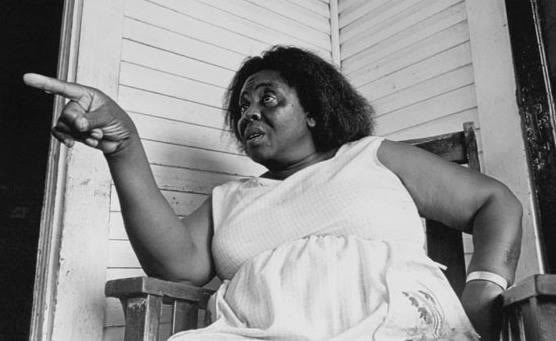
 'It was the 31st of August in 1962 that eighteen of us traveled twenty-six miles to the county courthouse in Indianola to try to register to become first-class citizens. We was met in Indianola by policemen, Highway Patrolmen, and they only allowed two of us in to take the literacy test at the time.'
                                                                         --Fannie Lou Hamer


Friday, December 7, 2018

from The New York Times:

‘I Read Morning, Night and in Between’: How One Novelist Came to Love Books

By Chigozie Obiom

For years my life followed a predictable pattern: I would sneak out of the house, play football with the neighborhood kids until dark and promptly contract malaria. Football was so intoxicating that I was willing to risk anything — the threat of punishment, injuries, even sickness — to play it. Soon enough, my mother would find out where I’d been and rush me to the Sijuwade Specialist Hospital in Akure. There, the doctor would conclude that I had kept the malaria hidden for some time and now needed to be admitted — a word my parents dreaded. By nightfall, I’d find myself in a hospital bed, my arm strapped to an intravenous drip.

My dad would often spend the night with me at the hospital while my mother tended to my siblings at home. Although angry that I had gone to play where mosquitoes could bite me, my father would not reprimand a sick child. Instead, I’d be treated with the utmost care, garlanded with endearments and brought an assortment of tasty treats I’d say I was hungry for. Then, once I’d eaten and he’d changed from his suit and tie into a shirt and pants, I would seize the moment I’d been waiting for all day.
“Daddy?”
“Eh, Uko,” he’d say.
“Please tell me a story.”

It was during one such hospital stay that I unearthed the greatest treasure of my life. I’ve come to understand that we stumble on the best things by serendipity. There are no preparations, no choreographed rehearsals. A man decides to plant a tree in his compound, on a piece of land that his parents have owned for decades. One day he digs up crude oil. In a year, his life is transformed! What he’d been just moments before his hoe dug into the earth becomes history.

My father was a gifted storyteller. At the hospital, he would tell me a story or two, or, sometimes, if he was not too tired, many in response to my request. I would try to imagine the worlds that opened up through his carefully chosen words. When, for instance, he told the story of the first white man who arrived in Igboland riding a bicycle, he made bicycle sounds, tapped his feet and gasped. He would imbue these noises with so much dread, so much significance, that vivid pictures would remain in my mind for days afterward. So riveting were these moments that I sometimes wished to prolong my hospital stay.

Between the ages of 5 and 7, I must have been admitted to the hospital at least four times, during which my father told me stories. I returned home after each stay to tightened surveillance, and it became increasingly difficult to steal out of the compound in the evenings. No longer sick, and with my father returning late from work, I was not able to get him to tell me stories. So I turned to my mother.

But my mother’s stories did not please me. They often seemed childish because they were peopled with animals, usually tortoises or hares. Only a few times did she tell stories of people; once, even of herself, ambushed on her father’s farm deep in the forest by what must have been two dozen chimpanzees. Moreover, my father told stories in English; my mother in Igbo. In a way that I could not understand at the time, the stories sounded better in English.

I discovered the reason for all this in my eighth year. My father had not told me a story in a long time. Frustrated, I barged into his room one evening just after he returned from work, and demanded he tell me a story. I had half hidden myself behind the curtain at the threshold of his door, afraid he would be angry at my intrusion.
“Oh,” he said. “Come in, Chigozie.”
“Yes, Daddy.”
I si gini?” he said to me in Igbo, even though I had spoken in English.
“You tell me a story only when I am sick. Please tell me a story now that I am not sick.”
My father laughed. He rocked back and forth and shook his head.
“Eight,” I mumbled.
“You can read now. Why don’t you read these stories yourself?” With that, he reached down to a small shelf filled with Central Bank bulletins and handed me a book whose cover had fallen off. He straightened a wrinkled page, tucked in a thread hanging loose from the spine and gave it to me.
“Go and read that, and it will tell you a story.”

I remember that night clearly. I took the book to the front porch and sat down on the floor, a foot from a trail of white ants. I opened the book to what I judged was the first page and read what turned out to be the most fascinating of the stories my father had told me.

The story was about a man who lived in a village long ago and who had magical powers. For years, the other residents fail to consult him, and, despite having performed wonders in the past, he is almost forgotten. Then, one day, the king of the village knocks on his door. His daughter, an only child, had followed an “unknown man” of extraordinary beauty to a secret location. Distraught, the king asks the shaman to find his daughter and return her to the village in exchange for half his lands. The shaman sets out only to discover that the princess had followed a skull — a member of a race of creatures who lived as skulls — that had borrowed body parts to become “a complete gentleman.”

I lay awake in bed all that night, mesmerized, even shocked, by the discovery. My father had told me this story as if it were his own creation. I had been in awe, believing him possessed of the most spectacular of gifts: that of storytelling. I had no idea that he was reading these stories and then recounting them to me.

While my mother, who had less education than my father, relied on tales told to her as a child, my father had gathered his stories from books. This was also why he told the stories in English. It struck me that if I could read well, I could be like my father. I, too, could become a repository of stories and live in their beautiful worlds, away from the dust and ululations of Akure.

What I discovered that night transformed my life. I devoured that book, “The Palm-Wine Drinkard,” by Amos Tutuola, and became a voracious reader. I read in the mornings, at nights, and, when that seemed insufficient, I read at school, in between classes. Sometimes I read during classes, placing books under the desk while the teacher taught. I was unmoved by punishments, by failing grades from not paying attention. When I had read all the books on my father’s shelf, he unearthed more from a box on top of his wardrobe. I read those, too. My head swirled, my mind brimmed. I felt as though I were walking on a metaphysical plane where no one else but me could walk, and whose pathways were known only to me.

I read while eating. I did errands hastily. I dressed hastily. My existence became mere machinery engineered to give me time to read. My mother complained, and my father began to panic. They put out strict orders that I not read anything while at school. I complied, but took to making up the lost time at odd hours, waking up in the dead of the night, when everyone was asleep, to read.
By the fifth month, I had read every book my father owned. One Saturday, he returned home and asked me to get in the car.
“I have a surprise for you.”

We drove through streets clotted with people until we got to a newly painted building with an arch over the gate that read, Ondo State Library. We walked through the arch into the building, the likes of which I had never seen. There were books everywhere, on shelves, on tables, on the floor.
“I want to register you here and bring you every Saturday here to read,” my father said.

I waited breathlessly as he completed the registration at the counter with an elderly, bespectacled woman who seemed in awe of the idea of a child coming in alone to read. My father, proud, agreed and said that it was all I wanted to do.
“That is good,” I heard the woman say. “Very, very good. Reading is like finding light, you know. Jesus said a light cannot be hidden under a bushel.”
“That is true,” my father said, nodding as the woman wrote my name on a small, square yellow card.
“Your son has found the light under the bushel.”
She handed me the card, and my father said he would pick me up at noon. I waved him goodbye and disappeared among the crowded shelves.

Chigozie Obioma is a Nigerian writer. His new novel, “An Orchestra of Minorities,” will come out in January.

I'd been in jail, and I'd been beat. I had been to a voter registration workshop, you know, to - they were just training and teaching us how to register, to pass the literacy test. Fannie Lou Hamer
Read more at: https://www.brainyquote.com/quotes/fannie_lou_hamer_875635

Thursday, December 6, 2018


 https://i.pinimg.com/736x/45/8d/4f/458d4fccdf8b92fb55756a003babb18f.jpg


'Learning to read is probably the most difficult and revolutionary thing that happens to the human brain and if you don't believe that, watch an illiterate adult try to do it.' 
                   -John Steinbeck
                                                                                                                 
If you give people literacy, bad ideas can be attacked and experiments tried, and lessons will accumulate.
Read more at: https://www.brainyquote.com/quotes/steven_pinker_547532?src=t_literacy
If you give people literacy, bad ideas can be attacked and experiments tried, and lessons will accumulate. Steven Pinker
Read more at: https://www.brainyquote.com/quotes/steven_pinker_547532?src=t_literacy
If you give people literacy, bad ideas can be attacked and experiments tried, and lessons will accumulate. Steven Pinker
Read more at: https://www.brainyquote.com/quotes/steven_pinker_547532?src=t_literacy
If you give people literacy, bad ideas can be attacked and experiments tried, and lessons will accumulate. Steven Pinker
Read more at: https://www.brainyquote.com/topics/literacy
If you give people literacy, bad ideas can be attacked and experiments tried, and lessons will accumulate. Steven Pinker
Read more at: https://www.brainyquote.com/topics/literacy

Wednesday, December 5, 2018

The dust jacket on one of her two posthumous story collections Evening in Paradise compares Lucia Berlin to Grace Paley and Raymond Carver and Alice Munro. She died in 2006. You can't open a magazine now without seeing something about her. I ordered three of her books from the local library. One just came in. Some stories. Libraries are great for sampling. Libraries are great for a lot of things. Lucky to be near one.

Tuesday, December 4, 2018


Outside the neighborhood library where I go in the morning, there's the same small group of people waiting to get in when the doors open. I'm there too waiting at 9:55. I'm that way. I go to get on a computer, even though I have replaced my broken laptop at home. I got in the habit of coming to my local branch after my old HP laptop fell on the floor and broke for good. I found I liked the routine of coming to the library. I'm there now. The other people waiting to get in every morning don't have laptops at home. I'm not sure all of them even have homes. Some of them play games on the computer. Some watch a TV show. You can hear a laugh now and then.


Monday, December 3, 2018

I emailed Three Lives bookstore after I read about this book in the Times this morning and ordered a copy. Last night I was up most of it.

Tell Us 5 Things About Your Book: Tossing and Turning in ‘Insomnia’
Anyone who has ever struggled to rest throughout an entire night — which I imagine is all of us, at one time or another — will sympathize with Marina Benjamin, who plumbs the agony of her own sleeplessness in her new book, simply titled “Insomnia.” In it, Benjamin describes the different varieties of middle-of-the-night dislocation — nights when “the thickening, sense-dulling” darkness “hangs velvety as a pall,” or the “luminous moonlit nights, lurid nights, when everything feels heightened.” She recounts her own experiences and frustrations, but also calls on the works of a wide range of others to illuminate the subject, like the poet Rumi, the painter Magritte and the philosopher David Hume; as well as fictional characters, like Odysseus’s wife, Penelope (“his absence stirs her desire, but then her insomnia curdles that desire into despair,” Benjamin writes). Below, she discusses the particularly bad bout of insomnia that inspired her to write the book, the recurrent image of sleeping women in classical art and more.

When did you first get the idea to write this book?
It grew out of experience. I’ve been an insomniac all my life. In childhood, it was much more a refusal to sleep, because I didn’t know where we went to — the usual kind of terror of night. Insomnia comes very much more from the outside now; it feels like an assault.

At the start of 2017, I was experiencing a particularly rough bout of it. It started intruding on and disrupting my sense of reality. I had various family problems detonating around me, blasting up from nowhere, it seemed. It felt that life had become very, very unwieldy, as though day and night had been turned upside down. Nonsense mingled with sense. I was exhausted, limping through the days.

I decided I wanted to write about it. Because I began writing from this distorted place, the first 5,000 words kind of gushed out; it was almost like automatic writing. Being in my mid-50s has felt unmoored, which is a very fruitful place to be, partly because it’s liminal — middle life is a transition moment, by definition, and so is insomnia: You’re precariously balanced between two worlds. I like the idea of being in that place and writing from that place, and to write a whole book in that strange way, with ambiguity and uncertainty, so we get dropped into my altered state.


What’s the most surprising thing you learned while writing it?
I was struck by the recurrent image of sleeping women and vigilantly wakeful ones — like Penelope — in literature and art. I had never thought of the various meanings that might attach to slumbering women, or what it was they meant or symbolized. The sleeping women I looked at were in mainly two areas. One was paintings; there were lots of classical women depicted as sleeping. And Silas Weir Mitchell’s rest cure was another fruitful area, where women who were exhibiting anxiety were basically put to bed for days and forbidden to get up except for bodily functions. It drove the writer Charlotte Perkins Gilman to the edge of madness. In my reading about that, these depictions of sleeping women seemed to embody the malaise of an entire society that was sated on the comforts of capitalism but alienated from its own wants; a kind of decadence, if you like, but in its worst manifestations.
Marina Benjamin    Credit: Luiz Hara
Another surprise was how active premodern people were at night; how common it was for them to perform at night functions that we associate with the day: chatting with friends, getting haircuts (sometimes in bed). The luxury of privacy was very rare, and many people didn’t have bedrooms that were separate spaces that were private and individual. They might have a divan in the living room or often in their office.

In what way is the book you wrote different from the book you set out to write?
What changed was its scope. When the first 5,000 words spilled out, they came largely in the nature of personal complaint — a way of venting my own frustrations with not sleeping. Then I got interested in philosophical and psychological perspectives: why we contrast darkness to light; how we navigate thresholds; how, with insomnia, we need to reckon with our own inner darkness — you feel that very palpably when you’re awake at night starting at the ceiling, drowning in a well of uncertainty and longing.
The form of the book gave me certain freedoms that grew as the book progressed. The digressive associative style, designed to mimic the insomniac experience, allowed me to expand my inquiry so I could bring in bigger themes: capitalism, the use of stimulants and the experience of other insomniacs, so that it’s not just an interior, experiential inquiry.
Who is a creative person (not a writer) who has influenced you and your work?
I visit a lot of galleries when I look for inspiration. If I had to pick a single artist who I find inspiring in this way, I’d pick Edward Hopper. It’s partly because he’s drawn to interior spaces, to rooms rather than landscapes. The people he paints are often alone, like the insomniac, lost in contemplation, looking out the window. Apart from the lushness of his work — the gorgeous palette of colors — there’s a real humanity there that I’m pulled to. But also a cheekiness — wanting to spy on people and learn their secrets.

And at the last retrospective of his work that I went to in London, I was surprised at the size of some of the canvases, as if he wanted to envelop you so you have an immersive experience, much like reading.

Persuade someone to read “Insomnia” in 50 words or less.
It elevates insomnia to see it as more than just a sleep disorder in need of a cure, or a state of lack. I felt that if we embraced insomnia — the joys and terrors of darkness — then we could celebrate what it means to live life fully and startlingly awake.

This interview has been condensed and edited.
Follow John Williams on Twitter: @johnwilliamsnyt.

Insomnia
By Marina Benjamin
133 pages. Catapult. $18.95.