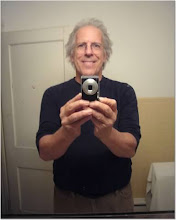
A slice of David Foster Wallace’s life makes for quite a
film
I’m not one for biopics. I didn’t even see the Johnny Cash
one with Joaquin Phoenix, even though I’ve sometimes told people I did, so they
wouldn’t scratch their heads or try to convince me what I missed. I didn’t see
the James Brown one, or Brian Wilson. You couldn’t strap me down and make me
watch Kevin Spacey be Bobby Darin.
But I overcame things and went to see The End of the
Tour on the morning of its second day at the Angelika. The trailer I’d
seen at the Woody Allen movie sold me on Jason Segel as David Foster Wallace. I
didn’t need to be sold on Jesse Eisenberg. Don’t miss their performances. I pulled Infinite
Jest off the shelf when I got home. I never quite finished it. Even
though I thought it was fantastic.
A Writer’s Letter to His Son
It’s also addressed to us
‘My reclamation would be accomplished, like Malcolm’s,
through books, through my own study and exploration. Perhaps I might write
something of consequence someday. I had been reading and writing beyond the
purview of the schools all my life. Already I was scribbling down bad rap
lyrics and bad poetry. The air of that time was charged with the call for a
return, to old things, to something essential, some part of us that had been
left behind in the mad dash out of the past and into America.’
New Rizzoli bookstore on Broadway and 26th Street. I popped in when they were just opening. It’ll
be a good space.
Monday, July 27, 2015
If I didn’t think its message would change the world, I wouldn’t
put my sign under my arm and get a subway down to Chambers Street every weekday
morning.
Sunday, July 26, 2015
From the first, cityReader has leadwith
a quote.
It's still the guiding star.
'We go to college to be given one more
chance to learn to read in case we haven't learned in high school. Once we have
learned to read, the rest can be trusted to add itself unto us.'
-Robert Frost
Saturday, July 25, 2015
Drop in younger children visiting libraries is worrying, says Chris Riddell
Children’s laureate gives hand-drawn response to figures revealing 26% decline in five- to 10-year-olds who had used library in the past seven days
Author and illustrator Chris Riddell added that he would be supporting the Reading Agency’s summer reading challenge. Photograph: Lauren Hurley/PA
The children’s laureate, Chris Riddell, has said a drop in the number of younger children visiting libraries is of great concern, expressing his views in a hand-drawn statement responding to new government figures.
The findings, part of a Department for Culture, Media and Sport report into children’s activities, reveal a 26% decline in the number of five to 10-year-olds who had used a library in the past seven days.
In 2010, 18.7% children aged five to 10 had done so, compared to 13.8% in 2014.
Within that age group, the number who had made a trip to their library at some point over the past 12 months had decreased from 76.4% in 2010 to 67.7% in 2014.
Chris Riddell’s illustrated message in response to the government’s report. Photograph: Chris Riddell/PA
Riddell, an author and illustrator, said: “A drop in younger children visiting libraries is of great concern. As children’s laureate, I am passionate about the role of libraries, both in schools and in the wider community. They are unique places where children can begin their journey as readers, as well as being creative hubs.
“Some of my favourite events have taken place in libraries, and over the next two years I intend to visit as many libraries as I can.”
He added that he supported the Reading Agency’s summer reading challenge, which encourages children aged four to 11 to read six books over the course of the school holidays.
There was a smaller drop in the number of five- to 15-year-olds who had used a library in the past week, down 6%, and a 7% decrease in those who had done so at least once in the year.
But the number of 11- to 15-year-olds who had visited a library in the past week had gone up 15%. This is despite a 1% fall in the numbers who had visited in the past year.
The apparent decline in interest in libraries comes despite an overall increase in the number of libraries, including those transformed from public libraries by community and volunteer groups. There are 3,450 libraries in England, according to the most recent figures from the Chartered Institute of Public Finance and Accountancy, up 2% from 2010.
But Diana Gerald, chief executive of reading charity Book Trust, said the figures were “amazing”.
She said: “Over recent years children’s use of libraries has been consistently high, and even with all the other modern attractions libraries are still visited by 70% of under-15s - that’s quite amazing.
“In these austere times, libraries have never been more important as a way for every child to access books and reading.
“Book Trust research shows that reading helps close the poverty gap and is actually more important for a child’s educational success than their family’s socio-economic status. Well-resourced libraries remain a gateway to equality of educational achievement and an affordable source of great pleasure. All children should have easy access to a library.”
Cressida Cowell, author of the bestselling How To Train Your Dragon series, which has been adapted for film, said reading was “the most important thing you can do for improving literacy and communication skills”.
She added: “Libraries are particularly good for children experimenting and trying books that they might not have expected to like.
“A great librarian can truly make a difference in thousands of children’s lives.”
Friday, July 24, 2015
That’s Ta-Nehisi Coates on the magazine. He’s been on all
the NPR shows and on the TV talk shows. I’m reading his book, Between the World
and Me. It’s one of five I’ve got going. I don’t usually have five going.
If you’ve seen him on TV or heard him, the book’s a lot
better than he talks. He’s a real writer.
Everybody tells you to read this book. I can see why. It’s
not the standard fare.
'We go to college to be given one more chance to learn to read in case we haven't learned in high school. Once we have learned to read, the rest can be trusted to add itself unto us.'
I’ve been a schoolteacher. Right after college in 1969, like a lot of guys, I taught school as an alternative to serving in Vietnam. I was married with a week-old daughter on graduation day. I taught grade school English in Cleveland, Ohio for six years. After that, I ran, eventually owned, a longstanding bookstore in downtown Cleveland. It felt something like Three Lives in the West Village. I went on to found an alternative weekly paper like the Voice, also in Cleveland. It lasted 12 years. Twenty-one years ago I moved here, armed with an idea and a prototype for a national book magazine. Like a Rolling Stone for books. I never raised the huge amount of money I needed. I then worked for a media company, editing a couple of neighborhood weeklies, more than once using my editor’s space to talk about city kids and reading. Between the editorial jobs, I taught English for a year here in Manhattan at a Catholic boys’ high school with mostly minority kids. I was terrible at discipline. But sometimes when we found a book or a story we liked, it all came together.
gunlockeb@yahoo.com