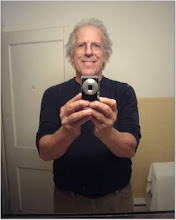
Three guys across from me in the neighborhood coffee shop. You don't see many people with books there. I'm usually the only one with a newspaper. If there's anyone else with one, they're my age. Young Asian women read what appear to be med school admission test study guides. You'll see now and then someone writing in a Moleskine. But mostly it's MacBooks. There's no wifi, so they get a connection through their phones. I enjoy observing them.
A different vocabulary ... reading aloud. Photograph: Michele Constantini/Getty/PhotoAlto
Iwas very lucky to have been brought up in a household where my older brother and my father read out loud to me as a teenager. It was a form of conversation or entertainment. They were “hey-listen-to-this” moments, taking in Dickens, Hardy, Catch-22, Catcher in the Rye, the Molesworth books, newspapers, magazines, Konrad Lorenz’s science books, Alan Moorehead’s accounts of exploration and any random passage from their studies. Come to think of it, my father didn’t stop! In his 70s, when I was in my 40s, my father still read me the stories he wrote about his childhood. His intonation, his pronunciation of Yiddish, our cackling at his jokes live on.
The way we speak is very different from the way we write – especially from the way we write continuous prose. When we speak, we hesitate, we contract phrases (as with “wouldn’t’ve”), we repeat ourselves, we often leave gaps for others to fill in. Or we might just tail off. We use intonation and gesture to indicate or colour meaning. We use more pronouns than we do when we write, because we can specify who we are referring to with gesture and tone. We use a lot of ums and errs and “you knows” to give ourselves time to think or to hold a listener’s attention. And we avoid front-loading sentences with phrases and clauses that delay getting to the main point.
Continuous prose flows without hesitation. Sentences close. We can front-load, refer backwards and forwards, organise “points” in an argument. We can avoid repetition, and use syntax and vocabulary for emphasis colour. “Who”, “which”, “that” and “where” clauses get more use in writing than in speech.
What follows from this is that in order to understand and be able to write continuous prose, we need to spend a good deal of time immersed in it. One way to do this is to hear it read out loud. This gets round that moment of resistance when we see a slab of writing on the page. I read continuous prose every single day of my life but if you tell me that I’ve got to read 10 pages of something, study it closely in order to extract some information (a common task in schools), I have at the very least the feeling: can I put it off till tomorrow? I’ve seen my own children thinking up every possible ruse to avoid it, too.
Some books are better (and more fun) for reading out loud than others. One of the reasons we invented continuous prose was to lay out an argument, piling points on top of each other, weighing one view against another, even to invite the reader to look back at something earlier or later in a book. It can be tough going listening to this kind of writing if you don’t have the book in front of you. Ideal for reading out loud are things such as short stories, poems, plays, modern novels, journalism, texts of speeches, biography, and narratives connected with scientific discovery, history, geography and the arts.
Ideally, any teenager being read to would have the text in front of them, so that we can stop and talk about things as we go along, referring back to what’s just been read. This means we make bridges, from the written to the oral and back again.
Friday, March 8, 2019
“Why were you lurking under our window?" "Yes - yes, good point, Petunia! What were you doing under our windows, boy?" "Listening to the news," said Harry in a resigned voice. His aunt and uncle exchanged looks of outrage. "Listening to the news! Again?" "Well, it changes every day, you see," said Harry. ―
J.K. Rowling, Harry Potter and the Order of the Phoenix
Thursday, March 7, 2019
I was born 50 years after slavery, in 1913. I was allowed to read. My mother, who was a teacher, taught me when I was a very young child. The first school I attended was a small building that went from first to sixth grade. There was one teacher for all of the students. There could be anywhere from 50 to 60 students of all different ages. -Rosa Parks
Wednesday, March 6, 2019
Here are the hours my local library, which looks pretty substantial in a New York City kind of way in this photo, is open. Notice the hours don't allow school kids to study there at night. In the suburbs the libraries are open at night. Notice that two days it doesn't even open till noon. Bars in the neighborhood open earlier. Notice that it's not open on Sunday. The pols must think everybody is in long brunch lines all day Sunday. If the city is progressive enough to scare Amazon away, for now anyway; if it's enlightened enough to vote 9-to-1 against its own Donald Trump, then you'd think it would be of a mind to have a vigorous library operation. You'd certainly think so in a city where people live in apartments and might not have a study space for their school kids.
Regular hours:
Day
Hours
Sunday
Closed
Monday
12 PM–7 PM
Tuesday
10 AM–6 PM
Wednesday
12 PM–7 PM
Thursday
10 AM–6 PM
Friday
10 AM–5 PM
Saturday
10 AM-5 PM
Tuesday, March 5, 2019
'A good newspaper, I suppose, is a nation talking to itself.'
―
Arthur Miller
Monday, March 4, 2019
No matter that we're asking Alexa all sorts of things in more and more of our homes. Or that my 10-year-old-grandson here in the city was on a computer in his bedroom playing Fortnite most of the time I stopped by there last evening. And no matter that Netflix is huge and getting huger. And so is the TV screen in most living rooms. No matter that it really is becoming the world Ray Bradbury predicted. Johnny still should learn to read well.
'We go to college to be given one more chance to learn to read in case we haven't learned in high school. Once we have learned to read, the rest can be trusted to add itself unto us.'
I’ve been a schoolteacher. Right after college in 1969, like a lot of guys, I taught school as an alternative to serving in Vietnam. I was married with a week-old daughter on graduation day. I taught grade school English in Cleveland, Ohio for six years. After that, I ran, eventually owned, a longstanding bookstore in downtown Cleveland. It felt something like Three Lives in the West Village. I went on to found an alternative weekly paper like the Voice, also in Cleveland. It lasted 12 years. Twenty-one years ago I moved here, armed with an idea and a prototype for a national book magazine. Like a Rolling Stone for books. I never raised the huge amount of money I needed. I then worked for a media company, editing a couple of neighborhood weeklies, more than once using my editor’s space to talk about city kids and reading. Between the editorial jobs, I taught English for a year here in Manhattan at a Catholic boys’ high school with mostly minority kids. I was terrible at discipline. But sometimes when we found a book or a story we liked, it all came together.
gunlockeb@yahoo.com