Tuesday, July 6, 2010

THE TWO-MINUTE WARNING

and other tell-tale signs that make you yawn at the school board meeting (now called, less democratically, the Panel for Educational Policy)

The most recent meeting was in late June in Manhattan (they rotate each month among the boroughs) at Murry Bergtraum High School on Pearl Street right by the Brooklyn Bridge. I went.

You think you’re at the wrong place when you get there 45 minutes early, even if you’ve witnessed the scene before at other school board meetings. There’s this huddle of cops outside the door and you wonder again if there’s been some problem or if the meeting’s been cancelled because Obama or some other big pol is in town and is being feted there. There are that many uniforms. Certainly more than you’d expect (I wouldn’t expect any) for a school board meeting, where if tradition holds, maybe 50 earnest citizens will show up. Most of them women.

It’s too early really to go in, and I roam around Pearl Street to kill time, wishing there were a bookstore I could duck into. I’m always wishing that. But even in a tonier neighborhood like Tribeca there isn’t one, even with the perfect demographics there. So there wouldn’t be one here. And I make do with a CVS; I go in and look around. I buy a Zone bar. And head back to the school.

Inside there’s a desk immediately up the entranceway’s polished stairs and the guard sitting there makes me feel a little self-conscious (passing by all those cops out front can do that to you) as I eat the last half of my Zone bar and look at signs on the wall. The biggest shows slash marks through a hat and a cell phone. I wouldn’t want to go to school there. I’m not going to say it feels like a prison. I wouldn’t know what that’s like. It’s very clean. But it doesn’t feel like the school I went to or my kids went to. It feels more like the very clean factory my father ran. I expect to see a sign that says ‘hard hat area’.

The guard asks if I’m there to make a comment later at the meeting and when I say no, they point me to the left and I go right where they say to go. I notice a photocopied sign taped to the wall along my way that says Men’s Restroom, near which I figure there’ll be a water fountain where I can rinse my mouth of that dusty sweet taste (no matter which flavor you get) a Zone bar leaves you with. I head the way the arrow on the sign says. And the guard from the table hollers at me, like I’m sneaking backstage. I tell him I’m going to the restroom and he gets OK with that.

The auditorium slated for the 6 to 8pm meeting is dimly lit like a bus terminal. No skylights. Low wattage. Security guards around. There’s a plainclothes cop (you can tell) sitting across the aisle from me. There aren’t many people there. A scattering of mostly African-American women. Up on the stage there is a long table with wings that will accommodate the panel. Each seat has a name plate in front of it, but the table is so far back on the stage that you can’t read the names. The only sign you can read clearly is an electronic one right up at the front of the stage with red LED numbers like a 24-second NBA clock. This one is set at 2:00...two minutes.

In the aisle right near me and in the other aisle at the long end of my row are microphones set up with signs taped to them saying: “Each Speaker Will Be Allowed Up To 2 Minutes.” You wonder why it’s set to two minutes. You’ve been to a dozen of these meetings, and it isn’t like a big time-consuming dialogue is going to take place. Most of the questions are addressed to Chancellor Klein and he’s no more apt to get into a discussion with the speakers than a wooden Indian would be. The questioners are tolerated, at best, at these things. They’d be better off calling C-Span or Boomer Esiason. They’d get more respect.

Once the panel gets seated, you’re disappointed that the microphones in front of them don’t send the sound out your way loudly or clearly. You’d be mad if you took your kid to see ‘Annie’ and the sound was that bad. And the table is so far back that you’ve got to look pretty closely to see whose mouth is moving. It’s not impressive. Nor is the fact that at any time you can look up and see as many as a quarter of them fiddling with their Blackberries. One young member walks in more than an hour late, slides his suit coat off, puts it on the back of the chair, takes his seat, reaches down into the coat pocket and pulls out his Blackberry and starts checking out his messages. He hasn’t been there a minute. No one’s going to say anything to him; the Chancellor’s on his Blackberry more than anyone.

Nothing much goes on. There is a screen above the stage that hypes some national numbers that show the fourth graders in the city have out-performed the rest of the state in reading, which is a good thing. But you think to yourself sitting there that this is New York Fucking City, the home of Random House and The New Yorker and a hundred other literate things I could list. So we beat Buffalo and my old hometown in rural western New York, and we beat Corning. That’s like saying Antwerp beat the other Belgian towns in diamond cutting.

The rest of the meeting is about budgets and the like. It’s boring, especially since you can’t hear what they’re saying very clearly.

It’s really all a yawn and everyone in the room is bored by it, panel included, except for the citizens who’ve written out what they’re going to say, and have timed it to two minutes, because they know about the two minute warning, but after adjusting the mike and clearing their throat and overcoming their jitters, it lasts a little longer than two minutes. But no matter, the bell goes off exactly when their time’s up and they have to stop.

It’s boring because there’s nothing radical going on. Most NYC public school kids cannot read well enough when they graduate (if they even do) to read To Kill a Mockingbird for pleasure, and up on stage more than a dozen adults are considering nothing radical to change that. Charter schools are as radical as they’ll go. Smaller schools are high right now on their priority list. Closing poor-performing schools is championed, as if the building’s structure caused poor reading performance.

You sit there and can feel the sluggishness. It’s like being in church, where no one gives evidence of being filled with the spirit. You want to stand up and say…hey, how come the kids aren’t taught to read proficiently? Here it is another school year over. Another year of failure. Because all the kids can’t read well. They’ve been in the city schools since early fall. They’ve been doing that drill for some years, in some cases for 12 years. And still most of the students can’t read well.

You wish someone on the board could explain that failure. Is it just a part of city life to them that most of the poor kids can’t read? Is it just something we have to accept? Like pigeons and rats? You wish some board member would speak clearly into his or her mike, and take two minutes to say: This is nuts. We’re not doing our job.

Caption: Don’t Take Up Our Time. Speakers are not really listened to.
At Least The Libraries Will Stay Open

But here in long-hours New York City, it should be more

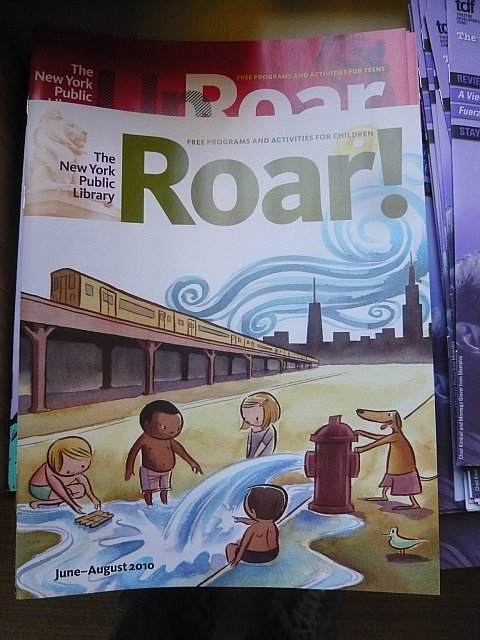
According to a mailing from the New York Public Library, over 130,000 New Yorkers sent notes to the city to get budget officials to reconsider the talked-about $37 million cut that would have darkened the libraries up to three days a week. These petitions must have helped. Now the libraries will stay open five days a week. That’s a relief. But still, even symbolically that’s not enough. This is Book Country, the home office of the publishing industry. You’d think library hours here would never be compromised. This is a city where you can eat late, drink till 4 in the morning. That’s radical, compared to Cleveland, let’s say. Why don’t we do something radical about library hours. Why not keep them open late. Open ‘em early. The kids are the future, pols always say. They say a lot they don’t do. We shouldn’t let them just talk about kids and the future and not hold them to it.

Caption: Kids want adults to be strong advocates for them. Let’s give them more hours.
Ann Beattie Was Like
Joni Mitchell To Us In The 70s


So I went to hear her read last month in Brooklyn

She still looked like the old dust jacket photos, even if it’s impossibly 35 years since we fell in love with her face. She has a new book out, a novella, Walks with Men. That’s what brought her to Brooklyn for a reading.

Not many people were there. I commented to my friend who went with me that it was hard to believe so few people showed up, so few late baby boomers who lived their lives in some ways according to the manners of her books. Like they lived their lives according to Dylan or Joni.

I read the novella. I’ve gone back to her older stories. Don’t miss reading them in your life.

The reading was at Book Court on Court Street in Cobble Hill. A perfect bookstore. Go some day, some night.

Caption: We Lived Accordingly. Her books were cautionary tales, and how-to manuals, at the same time.


I got this CD for sending a donation (I think it was
$65) to WNYC. I usually don’t ask them to send me
something. This time I did, because I remembered
one of my kids likes Jakob Dylan. I listen to parts of
Brian Lehrer’s and Leonard Lopate’s show every
day. I should have sent them hundreds of dollars.
These guys should each make hundreds of dollars
every hour they’re on. They’re better at what they
do than people in the city who do make that kind of
money. Send money to their station. wnyc.org.
And listen to them.

Monday, May 24, 2010

Ray Bradbury, a living legend, has a novel take on what schools should do about reading. Mary Leonhardt thinks about it and responds.

P.S. 451

In the latest ‘Paris Review’, there’s a lengthy interview with Ray Bradbury, my first favorite writer, whose book, Something Wicked This Way Comes, was the first I may have bought off one of those paperback book racks. I was a freshman in high school. I’d never heard of Ray Bradbury. I was only into sports stuff then. But the book seized my attention for some reason. It was a turning point in my life. I stopped spending every free moment bouncing balls and started looking for ways to be by myself with books that seized me.


In the interview Bradbury says:
‘Our education system has gone to hell…Young children must be taught how to read and write…We must not let them go into fourth and fifth grade not knowing how to read. So we must put out books with educational pictures, or use comics to teach them how to read.
We should forget about teaching children mathematics. They’re not going to use it ever in their lives. Give them simple arithmetic—one plus one is two, and how to divide, and how to subtract. Those are simple things that can be taught quickly. But no mathematics because they are never going to use it, never in their lives, unless they are going to be scientists, and then they can simply learn it later…If you are bright you will learn how to educate yourself with mathematics if you need it. But the average child never will. So it must be reading and writing.’

I underlined that when I read it. I agree with it, of course. I wondered what Mary Leonhardt thought of it. She has contributed to ‘acityReader’ twice so far. Actually her books on kids and reading seized me like Bradbury’s book did. Here’s what she thinks:


I wasn’t a big Bradbury fan but one of his books, Dandelion Wine, I really loved: the image of the little boy up in the tower in the morning, turning on the lights all over town, the boy wearing the wondrous first-of-the-summer sneakers, the golden dandelion wine. It was a book about happiness, and a happiness dependent on a child’s imaginings.

There are so many reasons why the best educational gift we can give children is a love of reading. One not usually thought of is the way books help children pretend—and imagine a life quite different from their own. I remember my daughter and her friends playing “Narnia” by pretending to be all of the different characters in the series. Children who can imagine being a unicorn or a wicked witch can later, in their lives, imagine being a doctor, or going on a safari. They can imagine a life much richer than the one fate seems to be dealing them.

But I think Bradbury got the math part a little wrong. Math is important. My son points out that people who play the lottery are math-challenged. They have no understanding of probability. People who spend themselves deep into debt often don’t understand, along the way, exactly how all of these little charges on their charge card are going to become a mountain of debt that overwhelms them.

But Bradbury was completely right about teaching reading being much more important—because one of the many other gifts that a habit of avid reading bestows is, very often, the ability to learn math easily and quickly. Yes: Avid readers are usually pretty good at math as well.

I first realized this when I was teaching high school English and writing books about how to get kids reading. One thing I did then was to study SAT scores of avid readers. I found what I was looking for—the verbal scores of avid readers were always very high, while the SAT scores of good students who did little independent reading were pretty mediocre. There were the kids everyone called “poor testers”, but I knew they just weren’t avid readers.

But then something else jumped out at me. The kids with very high verbal scores almost all had high math scores as well. Not scores as high as their verbal scores, but very respectable scores—usually in the 600 range, which was a very high score then. But it didn’t work the other way. Kids with very high math scores did not necessarily have high verbal scores. Their verbal scores were just as likely to be in the low 500’s or 400’s.

So a high verbal score seemed to guarantee a high math score, but a high math score did not guarantee a high verbal score.

I’ve thought about this a lot. My guess is that avid reading—which is necessary for the high verbal scores—develops the ability to process information in a sophisticated way. Think of children reading a Harry Potter book. Not only do they have to understand a world with customs and rules completely different from their own, they have to understand characters whose identity even shifts around. Who is good? Who is evil? Who is out to get Harry?

And the incredible wealth of details and descriptions in those books! Some of my high school students used to reread all of the books currently in the series before a new one was due. They wanted to make sure they remembered everything perfectly.

Now multiply this by hundreds of books, the number that avid readers read in their childhood. They have stretched their minds hundreds of times by following multiple plots and characters, by understanding the major themes in life—that things aren’t always what they seem, that people grow through adversity, that bravery and goodness are their own reward.

The kind of elastic mind that grows through avid reading can figure out math problems and chemistry equations, and the causes of World War II. It’s a mind that doesn’t just retain information; it’s a mind that sees subtleties, that understands different perspectives, that can grasp the whole, rather than just the part, of a problem.

I used to be surprised when my avid fantasy readers seem to gravitate towards a love of history. Weren’t they opposite? Then I realized that most great fantasy writers—J.R.R. Tolkien, Robert Jordan, J.K. Rowling, Philip Pullman—create complex political worlds with different factions shifting for power and control. Just like history!

Historical fiction is also wonderful background, allowing children to understand different cultures and times. Romances explore relationships. Stories of families can help illuminate a child’s own family.

Here is how I would run an elementary school—how I would “teach” reading:

After children acquire a basic ability to read simple books—with luck by second grade—I would fill their classrooms, the library, the halls, the cafeteria, all of the offices—with reading material they could easily love. Comics. Magazines. Easy reader books. Lots of popular children’s fiction. Mysteries. Fantasy. Anything I could find that children would read.

Then for at least three or four hours every day, I would have quiet reading time in the classrooms. Let the children choose what they want to read. Don’t give them tests. Don’t make them answer comprehension questions and do worksheets. No: have rugs, beanbag chairs, comfortable sofas—and let the children read.

While the children are reading the teacher can also read, but she can also use this quiet time to give individual help to children, with writing, with math, with whatever children are having trouble understanding. But most of the teaching will be done by the books: books that children love will teach them much more sophisticated reading and writing skills than a million worksheets and vocabulary drills.

You think children won’t sit still for this? For years I taught tenth graders who hated reading, who were scoring the lowest on all kinds of achievement tests. I just sat them down in my book-filled classroom and said, “Read.” And, after awhile, they did. By the end of the semester they were pleading for more “just reading” days. When the bell rang for lunch, many would be still hunched over their books, reluctant to leave those enthralling worlds. Years later now I run into these kids occasionally, and always ask them if they are still reading. The answer is usually yes. And they are usually doing well in a career.

So if you want children to do well in math—and science and history and foreign languages and technology and everything else—my advice is simple: make sure they have plenty of good books to read, and time to read them.

Caption: Listening in on a conversation with Ray Bradbury. ‘The Paris Review’ interviews with writers are the last word.
Books, Interrupted

Budget cuts could shut some libraries, reduce hours for sure

Here’s what the New York Public Library flier says: 18 million visits to the system’s branches each year. 50 million books and other materials. 39,000 programs and classes. 600,000 visits to children’s programs. 34,000 attended job classes. Thousands of books loaned to nursing homes, senior centers, schools, and prisons.

Here’s what’s at stake, according to the flier, if budget cuts happen:10 branches closed. Others open only 4 days. 736 staff positions eliminated.

You might not be a library-goer. You’re missing out if you’re not. There are way more interesting, and worthwhile things in them than there were in the Virgin record stores. They’re more stimulating than Whole Foods. Better than anything on TV. Books, newspapers, magazines, chairs, tables, lights, community bulletin boards, wifi. Now, all that’s there for you 6 days a week. You don’t want less. Go to NYPL.org and see how you can help. And go to your branch, if you don’t normally. Check out what’s been there all along for you.

Caption: Go to the site. It’s as important as keeping schools open.
A Store of One’s Own

Why not be somebody at your local bookshop

Did you know you used to be able to borrow books in bookstores? They had lending libraries in the store and you could rent a book, for not much. Hemingway used to do that at Sylvia Beach’s Shakespeare and Company, an English language bookshop in Paris during that famous time of Gertrude Stein and Hemingway and James Joyce. Beach got known for publishing Ulysses in 1922 when big publishers, and even big countries, like ours, wouldn’t touch it. Ex-pat writers would pick up their mail there, cash a check. Sounds great, doesn’t it.

Well, you could have a bookstore here where they know your name. Just pick an independent bookshop near you or one somewhere in town that you really like, and start going in there often. Order books from them. Email an order to them. Call them. You live in New York, like Hemingway lived in Paris. Order books like he did. Hell, be like Hem. Fish the Amazon, don’t
order books from it.

Caption: An American in Paris. Sylvia Beach fashioned the store and life (I think) she wanted.